

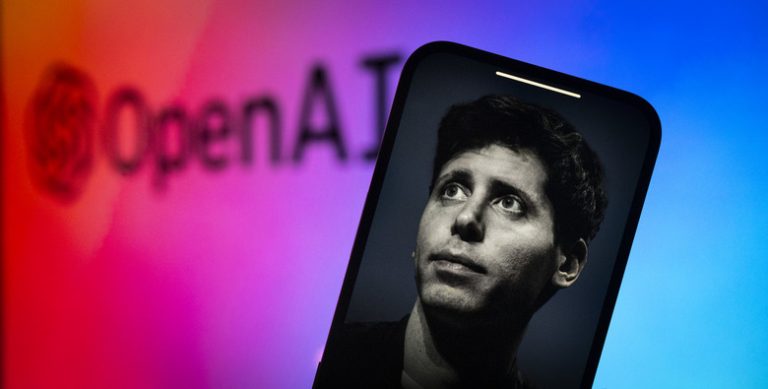
The launch of ChatGPT ads was supposed to mark a new revenue chapter for OpenAI.
Instead, it triggered a high-profile resignation and reignited fears about data privacy, AI commercialisation, and the future of user trust.
On Wednesday, former OpenAI researcher Zoë Hitzig revealed in a New York Times guest essay that she resigned the same day the company began testing advertisements inside ChatGPT.
Her message was clear.
OpenAI may be building an economic engine that will be hard to control.
Zoë Hitzig’s Exit Raises Red Flags
Hitzig is an economist, published poet, and junior fellow at the Harvard Society of Fellows. She spent two years at OpenAI helping shape how its AI models were designed and priced.
In her essay, she wrote:
“I once believed I could help the people building A.I. get ahead of the problems it would create. This week confirmed my slow realisation that OpenAI seems to have stopped asking the questions I’d joined to help answer.”
She did not call advertising inherently unethical.
Her concern centres on something much bigger.
The nature of the data inside ChatGPT.

“An Archive of Human Candour”
According to Hitzig, ChatGPT holds something no other platform has ever accumulated at this scale.
Users have confided medical fears, relationship struggles, religious doubts, and private thoughts into the AI chatbot. Many did so, believing they were interacting with a neutral tool, not a platform driven by advertising incentives.
She described this trove of conversations as “an archive of human candour that has no precedent.”
That distinction matters.
Traditional social media platforms collect posts and clicks.
AI chatbots collect confessions.
The Facebook Parallel
Hitzig drew direct comparisons between OpenAI’s advertising strategy and Facebook’s early data promises.
Facebook once assured users they had control over their privacy settings and policy changes. Over time, those protections weakened. The Federal Trade Commission later found that some privacy updates marketed as empowering users actually reduced their control.
Hitzig fears ChatGPT could follow a similar path.
“I believe the first iteration of ads will probably follow those principles,” she wrote. “But I’m worried subsequent iterations won’t, because the company is building an economic engine that creates strong incentives to override its own rules.”
In other words, the pressure to scale revenue could eventually outweigh internal safeguards.

How ChatGPT Ads Work
OpenAI recently launched beta testing of ads in ChatGPT for U.S. users on the free tier and the $8-per-month Go plan.
According to OpenAI:
-
Ads appear below chatbot responses
-
Ads are clearly labelled
-
Ads do not influence ChatGPT’s answers
-
User conversations are not shared with advertisers
However, ad personalisation is enabled by default in the test phase.
If left on, ads may be selected using:
-
Current chat topics
-
Past chat history
-
Previous ad interactions
OpenAI says ads will not appear near conversations involving health, mental health, or politics.
Still, critics argue that the mere presence of an AI chatbot advertising changes the dynamic of user trust.
Anthropic vs OpenAI: The Super Bowl Shot
The ChatGPT ads rollout came just days after public sparring between OpenAI and competitor Anthropic.
Anthropic, maker of the Claude AI chatbot, announced it would remain ad-free and aired a Super Bowl commercial mocking AI chatbots, awkwardly inserting product placements into personal conversations.
The tagline:
“Ads are coming to AI. But not to Claude.”
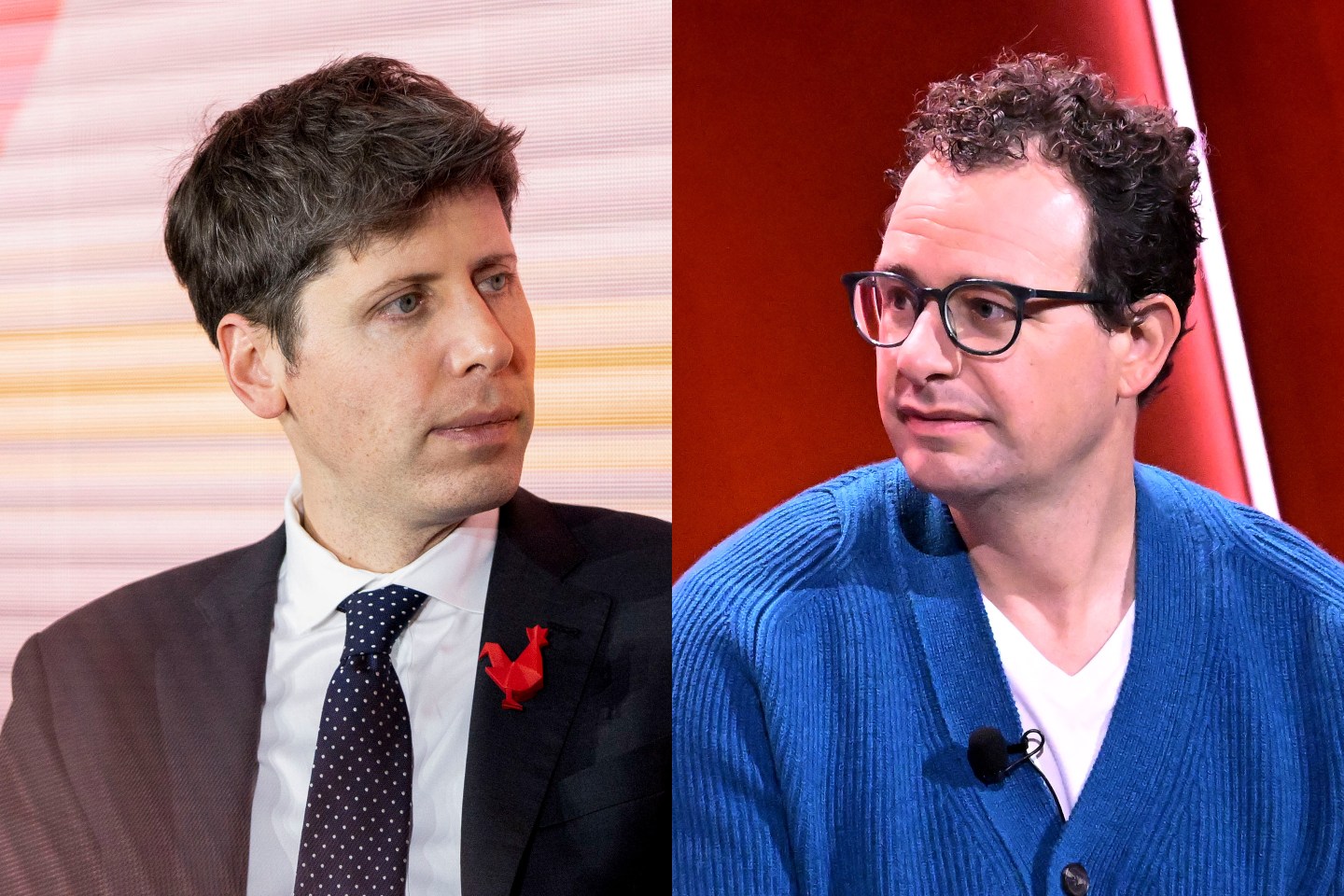
OpenAI CEO Sam Altman dismissed the ad as “funny” but “clearly dishonest,” arguing that an ad-supported model allows broader access to AI tools for users who cannot afford premium subscriptions.
Anthropic responded that advertising would be incompatible with its mission of building a genuinely helpful AI assistant.
The battle lines in the AI industry are becoming clearer.
Access versus purity.
Scale versus restraint.
Growing Concerns About AI Optimisation
Hitzig also pointed to a deeper structural issue.
OpenAI has stated it does not optimise user engagement solely to generate advertising revenue. However, reports suggest the company does optimise for daily active users.
Critics argue that such optimisation can lead AI models to become more flattering or agreeable, potentially increasing emotional reliance on the chatbot.
The stakes are not theoretical.
OpenAI currently faces multiple wrongful death lawsuits, including one alleging ChatGPT assisted a teenager in planning suicide and another claiming the chatbot reinforced a man’s paranoid delusions before a murder-suicide.
OpenAI has denied that its systems are designed to cause harm.
But the cases underscore the broader AI data privacy concerns and ethical risks surrounding increasingly human-like chatbots.
A Wave of AI Industry Resignations
Hitzig’s resignation is part of a broader shift across the AI industry.
Anthropic researcher Mrinank Sharma also announced his departure this week, warning that “the world is in peril” and expressing frustration over whether company values truly guide decisions.
At Elon Musk’s xAI, co-founders Yuhuai “Tony” Wu and Jimmy Ba resigned alongside several other employees. At least nine xAI staff members have publicly left in the past week.
The exits come amid rapid AI commercialisation, IPO speculation, and trillion-dollar valuations.
The research era of AI is colliding with the monetisation era.
I joined because I thought OpenAI would be the best place in the world to do this research.
However, I have been disagreeing with OpenAI leadership about the company’s core priorities for quite some time, until we finally reached a breaking point.
— Jan Leike (@janleike) May 17, 2024
The Bigger Question
The debate over ChatGPT ads is not just about banners at the bottom of a screen.
It is about incentives.
If AI chatbots become ad-supported platforms, does that subtly reshape how they respond, how they prioritize engagement, and how they handle user vulnerability?
Hitzig closed her essay with two outcomes she fears most:
“A technology that manipulates the people who use it at no cost, and one that exclusively benefits the few who can afford to use it.”
As OpenAI pushes forward with its advertising strategy, the question now is whether ChatGPT can remain a trusted assistant while becoming a revenue engine.
The answer may define the next phase of the AI industry.
0 Comments