

If you’re currently sitting at a desk, sipping a lukewarm oat milk latte, and feeling relatively secure because your job involves “critical thinking” and “complex spreadsheets” rather than manual labor—I have some news. And honestly? It’s the kind of news that makes you want to close your laptop and go live in a yurt in the middle of the woods.
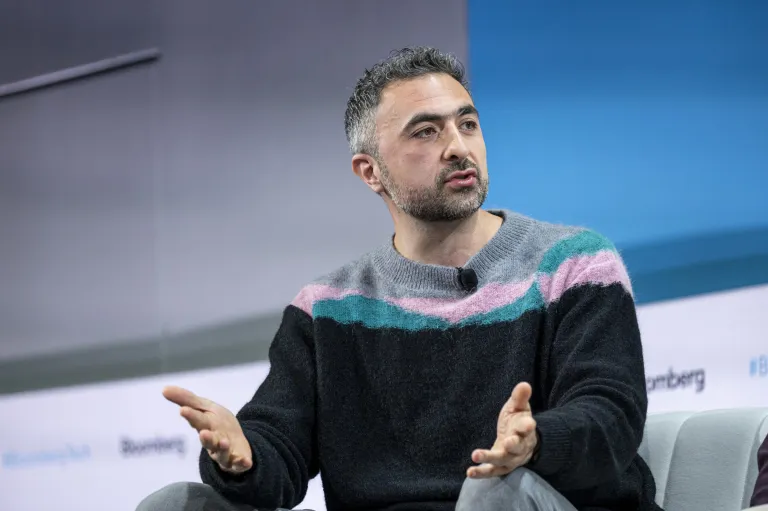
Mustafa Suleyman, the CEO of Microsoft AI and the co-founder of DeepMind, just dropped a bombshell that has the internet—and specifically the folks over at r/antiwork—spiraling. In a recent talk that’s currently making the rounds, Suleyman issued a stark warning: white-collar workers have about 18 months before AI fundamentally changes everything they know about their careers.
Yeah. Eighteen. Months. That’s essentially three seasons of a Netflix show and a few long weekends.
Microsoft AI boss issues 18-month warning to all white-collar workers
by u/TheMirrorUS in antiwork
The End of the “Email Job” As We Know It?
For years, we’ve been told that the “robot uprising” was only coming for the factory floor or the warehouse. We were told that as long as you had a degree and knew how to navigate a Zoom call, you were safe. But according to Suleyman, the goalposts haven’t just moved—they’ve been digitized and automated.
The Microsoft AI boss isn’t just talking about ChatGPT writing a mediocre poem for your niece’s birthday. He’s talking about “Artificial General Intelligence” (AGI) levels of capability. We are moving toward a world where AI doesn’t just help you with your work; it is the work.
Think about your daily routine. How much of it is spent summarizing meetings? Formatting data? Drafting emails that could have been a Slack message? Suleyman suggests that within the next year and a half, the “reasoning” capabilities of AI will reach a point where the vast majority of administrative and analytical tasks performed by humans will be redundant.
Why the 18-Month Timeline?
You might be asking, “Why the rush, Mustafa?” The answer lies in the terrifyingly exponential growth of LLMs (Large Language Models). Unlike humans, who need decades to learn a craft and a few cups of coffee to wake up, AI learns at the speed of light.
The 18-month window isn’t an arbitrary number. It’s the projected timeline for the next generation of models (think GPT-5 and beyond) to be fully integrated into the tools we use every day. Microsoft isn’t just making a chatbot; they are baking AI into Windows, Office, and every “white-collar” tool in existence.
When your Excel sheet can not only organize itself but also provide a strategic analysis of why the numbers are down—and then draft a 10-slide PowerPoint presentation to explain it to the board—what is “Dave from Marketing” actually doing for eight hours a day?
The Internet Is Not Taking It Well (Obviously)
When the news hit Reddit’s r/antiwork sub, the reaction was exactly what you’d expect: a mix of existential dread, cynical “I told you so’s,” and genuine fear for the future of the middle class.
One user commented, “So we spent $100k on degrees to be replaced by a glorified predictive text engine in 18 months? Cool. Cool cool cool.” Another added, “The ruling class is literally telling us they don’t need us anymore. What happens when the ‘useless’ population grows to 50%?”
The consensus among the digital crowd is that we aren’t seeing a “labor-saving” revolution that will lead to more leisure time. Instead, people fear a “labor-replacing” revolution that leads to corporate profits skyrocketing while the average worker struggles to figure out how to pay rent without an “office job.”
Is This the “Black Mirror” Episode We’re All Living In?
It certainly feels like it. Suleyman’s warning highlights a massive disconnect in our current society. On one hand, tech giants are racing to create the most powerful AI possible. On the other hand, our economic systems are still entirely built around the idea that “Work = Survival.”
If AI can do the job of an entry-level analyst, a paralegal, or a junior coder, what happens to the career ladder? If you can’t get that first rung on the ladder because a bot took it, how do you ever become an expert?
Suleyman himself has called for regulation and a “containment” strategy for AI, acknowledging that the displacement will be massive. But let’s be real: regulation usually moves at the speed of a snail, while AI moves at the speed of a fighter jet. By the time the government figures out how to tax a bot, your desk might already be occupied by a server rack.
The Silver Lining (If You Squint Really Hard)
Is there any good news? Well, some optimists argue that this will free us from the “drudgery” of modern work. They imagine a world where we spend our time on creative endeavors, community building, and personal growth.
But for that to happen, we’d need some pretty radical shifts in how our society functions (hello, Universal Basic Income). Without those shifts, the “18-month warning” feels less like a promise of freedom and more like a countdown clock.
The reality is that “human skills” are about to become the new premium currency. Empathy, complex negotiation, physical craftsmanship, and genuine human connection are things AI still struggles to mimic authentically. But for the millions of people whose jobs are essentially “information processing,” the clock is definitely ticking.
The New Survival Guide
So, what are we supposed to do? Panic? Delete our LinkedIn profiles and move to a farm?
The best advice floating around right now is to become “AI-fluent.” Don’t fight the tool; learn to be the one who directs it. If 18 months is the deadline, then the next year should be spent figuring out how to make yourself the person who manages the AI, rather than the person the AI replaces.
But even then, there’s a nagging question at the back of everyone’s mind. If the AI gets good enough to manage itself, what then?
Suleyman’s warning isn’t just a corporate update; it’s a cultural shift. We are approaching a threshold where the definition of “professional” is about to be rewritten. Whether that’s a utopia or a nightmare depends entirely on who holds the remote.
0 Comments