

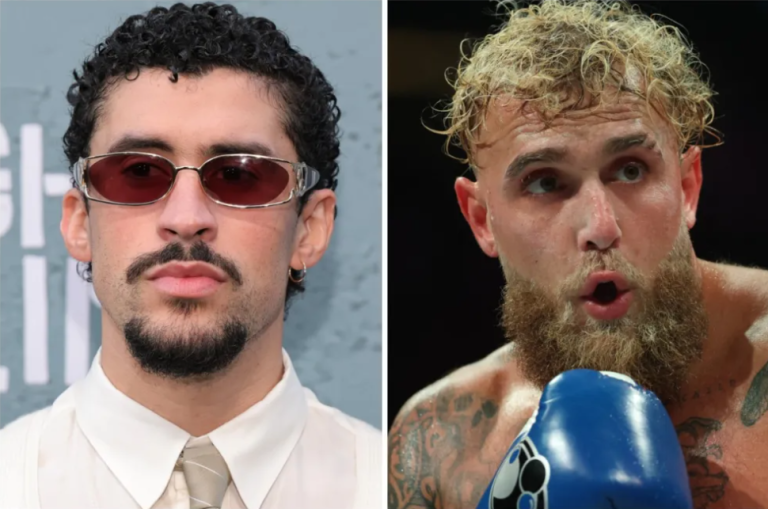
Influencer-turned-boxer Jake Paul ignited a wave of online debate after he publicly urged viewers to switch off the Super Bowl halftime show featuring global music star Bad Bunny.
The controversy unfolded in real time as millions prepared for one of the most watched entertainment moments of the year. While halftime performances typically bring audiences together, Paul used the opportunity to argue the opposite — encouraging fans to protest with their remotes.
Writing on X, Paul declared that he would be intentionally turning the show off and asked others to follow his lead.
“Purposefully turning off the halftime show,” he wrote. “Let’s rally together and show big corporations they can’t just do whatever they want without consequences (which equals viewership for them). You are their benefit. Realize you have power. Turn off this halftime.”
He then escalated the criticism further, labeling the Puerto Rican superstar a “fake American citizen” and claiming he could not support someone who, in Paul’s view, has spoken negatively about the United States.
Within minutes, the message began circulating widely, drawing thousands of responses and pushing the halftime show into political territory long before the first song even started.
Why the comment struck a nerve
Part of the immediate reaction stemmed from Paul’s own connection to Puerto Rico.
Jake and his brother, Logan Paul, relocated to the island in 2021. Logan later explained in an interview that favorable tax policies played a significant role in the move.
Because of that history, critics were quick to point out what they saw as an uncomfortable overlap between the brothers’ personal financial decisions and their criticism of Bad Bunny.
The roots of the disagreement
This isn’t the first time the Paul family has spoken publicly about the Puerto Rican artist.
During a 2022 appearance on The Philip DeFranco Show, Logan questioned what he viewed as a contradiction: supporting local residents while allegedly benefiting from the same tax structures that have drawn wealthy mainland investors to the island.
The conversation came shortly after Bad Bunny released his documentary, El Apagón – Aquí Vive Gente. The film explored concerns about gentrification, rising housing costs, and the displacement of longtime Puerto Rican communities.
For many fans, the documentary cemented the musician’s political voice. For others, it opened the door to scrutiny over how celebrities navigate the systems they criticize.
Jake Paul’s halftime-day comments brought that unresolved argument roaring back into public view.
More recent sparks
The boxer has also been active in other political conversations.
Following remarks made by Billie Eilish during a recent awards show in which she criticized Immigration and Customs Enforcement, Paul fired back online. In one post, he argued that people who oppose law enforcement should not rely on emergency services.
He later mocked the singer directly, using a nickname in a follow-up message that quickly drew pushback from her supporters.
Those exchanges had already placed Paul at the center of heated debates, so when he turned his attention toward the Super Bowl stage, audiences were primed for another round.
A halftime show that became a flashpoint
Halftime performances often carry cultural weight, but rarely do they become battlegrounds hours before they happen.
Paul’s call for a viewership boycott created two competing reactions: supporters who agreed with the sentiment and critics who accused him of manufacturing outrage.
Either way, the strategy worked in one respect — people were talking.
By kickoff, the conversation had expanded far beyond music, touching on politics, identity, celebrity influence, and the power of audiences in the streaming era.
Whether viewers followed Paul’s advice or tuned in specifically because of the controversy, the moment demonstrated how quickly a single post can reshape the narrative around a global event.
And as always in the age of viral commentary, the debate continued long after the final whistle.
0 Comments