

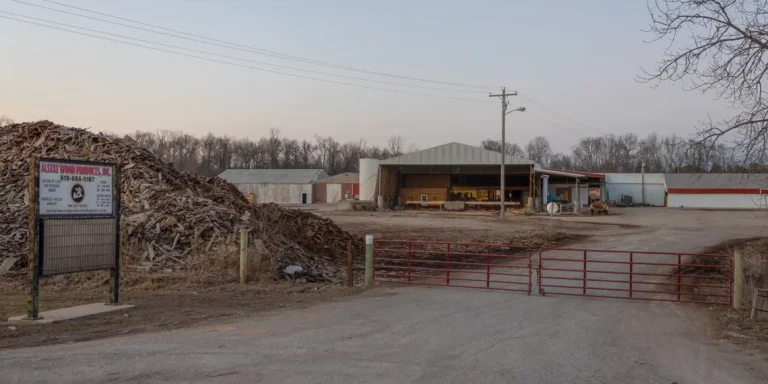
Imagine this: It’s a crisp morning in Southern Illinois. You’ve got your coffee in the cup holder, the radio is playing something low-key, and you’re mentally prepping for a long shift at the sawmill. You’re doing exactly what society tells you to do—showing up, working hard, and providing. But for five men in the small town of Du Quoin, that routine didn’t end with a time clock and a paycheck. It ended with flashing lights, federal agents, and a situation that has sent shockwaves through both the local community and the digital world.
The news broke recently that ICE (Immigration and Customs Enforcement) agents intercepted and detained five men who were simply on their way to work at a Du Quoin sawmill. In an era where the “labor shortage” is a constant headline, seeing productive workers pulled off the streets has sparked a firestorm of debate.
The story originally gained massive traction on the r/antiwork subreddit, a corner of the internet usually reserved for venting about bad bosses and low wages. But this story struck a different chord. It wasn’t about a toxic manager; it was about the fundamental precarity of the modern worker.
The Commute That Changed Everything
Du Quoin isn’t exactly a bustling metropolis. It’s the kind of place where people know their neighbors and the local industry—like the sawmill—serves as the backbone of the economy. For the five men involved, the sawmill wasn’t just a place of employment; it was their livelihood.
According to reports, the detention didn’t happen at the workplace, but during their commute. This distinction is what has many people on social media feeling particularly uneasy. There’s something visceral about being stopped in transit. It suggests a level of surveillance and targeting that feels, to many, more like a scene from a thriller movie than a Tuesday morning in rural Illinois.
When the news hit, the internet did what it does best: it started asking questions. Why these men? Why now? And what happens to the families they’ve left behind in the lurch?
A “Logistical” Nightmare for the Local Economy
Let’s talk about the sawmill for a second. If you’ve ever lived in a town that relies on manual labor and manufacturing, you know that every pair of hands counts. When five able-bodied, consistent workers are suddenly removed from the equation, the impact isn’t just felt by their families—it’s felt by the business and the town’s bottom line.
Users on Reddit were quick to point out the irony of the situation. “We’re constantly told ‘nobody wants to work anymore,'” one user commented, “and yet, here are guys literally on their way to work being hauled away.”
It highlights a massive disconnect in our current social climate. On one hand, there is a push for extreme border and immigration enforcement; on the other, there is a desperate need for the very labor these individuals provide. When those two forces collide in a small town like Du Quoin, the results are messy, heartbreaking, and economically disruptive.
The Human Cost (Beyond the Headlines)
It’s easy to look at a headline and see “five men detained.” It’s much harder to look at the empty chairs at their kitchen tables. These men weren’t detained in the middle of a crime; they were caught in the middle of a contribution.
The r/antiwork community, which has over 2 million members, rallied around the idea that “work” should be a safe space—or at least, the journey to it should be. The thread discussing the incident became a lightning rod for stories about how immigration enforcement affects the workforce.
Many argued that targeting workers on their way to a job is a tactic designed to spread fear, not just among the undocumented community, but among employers who are already struggling to keep their doors open. If your employees can’t even make it to the parking lot without being detained, how can any business maintain stability?
Why This Is Going Viral Now
ICE agents detain five men on their way to work at a Du Quoin sawmill
by u/AdSpecialist6598 in antiwork
This story isn’t just about one incident in Illinois. It’s a snapshot of a much larger, much more complicated American tension. We are currently living through a period where the definition of “the American Dream” is being fiercely contested. Is the dream about following every bureaucratic rule to the letter, or is it about the grit and grind of showing up to a sawmill every morning to build a life?
The viral nature of the Du Quoin story stems from its relatability. Almost everyone knows what it’s like to have a “morning routine.” We all know the feeling of being halfway to our destination, thinking about our tasks for the day. To have that journey interrupted by federal agents is a jarring thought that crosses political lines and touches on a basic human fear: the sudden, forced loss of agency.
Furthermore, the involvement of ICE in a state like Illinois—which has various “sanctuary” protections in place—adds a layer of political complexity that keeps the comments sections humming. It’s a reminder that federal and state priorities are often at war, with individual workers caught in the crossfire.
Comment
by u/AdSpecialist6598 from discussion
in antiwork
The Ripple Effect
As of now, the fate of the five men remains a subject of concern for local advocates and labor groups. But the ripple effect is already visible. Other workers in the area are reportedly nervous. Businesses are looking over their shoulders. And the town of Du Quoin is now the face of a national conversation it probably never asked to lead.
The sawmill continues to run, but the atmosphere has undoubtedly shifted. When a community loses members of its workforce in such a public and sudden way, it leaves a scar. It changes how people view their neighbors, their commute, and their safety.
In the end, this isn’t just a story about immigration policy; it’s a story about the value we place on labor and the people who perform it. If we value work, shouldn’t we value the worker?
0 Comments