

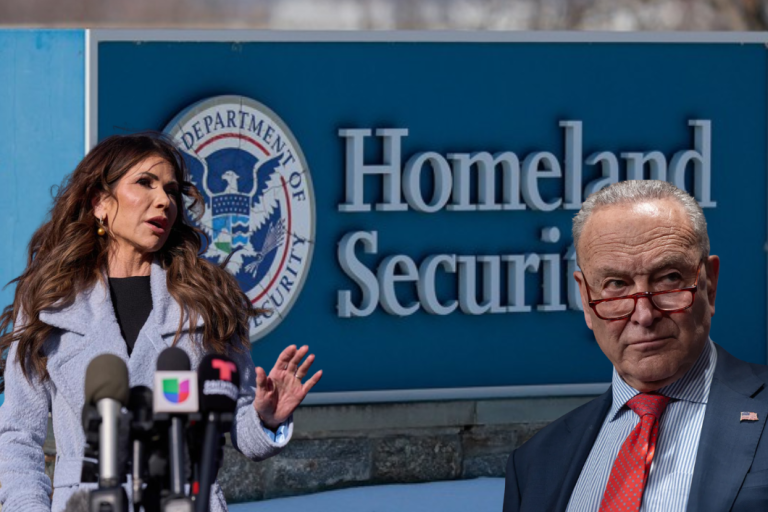
If you feel like you’ve seen this movie before, you’re not alone. Welcome to “Government Shutdown: Season 24,” where the stakes are high, the drama is manufactured, and once again, thousands of workers are caught in the crossfire of a political poker game.
This time, the Department of Homeland Security (DHS) is the one standing on the edge of the cliff. While we’re all used to the occasional D.C. deadlock, this particular standoff is getting spicy. With Democrats demanding major restraints on Immigration and Customs Enforcement (ICE) and the clock ticking toward a shutdown, things are looking less like a “civil debate” and more like a high-stakes episode of Survivor.
But what does this actually mean for you, for the workers, and for that flight you have booked next month? Let’s dive into the chaos.
Wait, Didn’t We Just Do This?
Yes. Yes, we did. In the world of modern politics, “funding the government” has become the chore that everyone procrastinates on until the very last second—kind of like that 10-page term paper you started at 3:00 AM.
The current drama centers on a fundamental disagreement over how ICE operates. Democrats are pushing for new restraints on the agency, citing concerns over civil liberties and the way immigration is handled. On the other side of the aisle, there’s a firm “hard pass” on those demands. The result? A massive department that oversees everything from your airport security (TSA) to the Coast Guard and the Secret Service is staring down an empty bank account.
The “Essential” Worker Paradox (Or: Why Working for Free Is Not a Vibe)
Over on Reddit’s r/antiwork, where this news first started bubbling up, the sentiment is exactly what you’d expect: exhaustion.
When the DHS shuts down, it doesn’t mean everyone just goes home and bakes sourdough bread. Instead, we enter the strange, legal twilight zone of “essential workers.” This includes TSA agents, Border Patrol officers, and Coast Guard members. These people are required to show up to work because their jobs are deemed essential for national security.
The catch? They don’t get paid. At least, not until the shutdown ends.
Imagine showing up to your 9-to-5, dealing with grumpy travelers who can’t figure out how to take their shoes off, and knowing that your paycheck on Friday is going to be exactly $0.00. It’s a move that has many questioning the “dream” of federal employment. In an era where “quiet quitting” and “know your worth” are the mantras of the workforce, being used as a political bargaining chip is a tough pill to swallow.
The ICE Cold Standoff

The heart of the issue is ICE. For years, the agency has been a lightning rod for controversy. Democrats are currently leaning into a strategy of using the budget as leverage to force changes in how ICE conducts enforcement and removals. They want more oversight, more “restraints,” and a shift in how the agency interacts with communities.
But when you play chicken with a $60 billion department, things get messy. If the DHS shuts down, the impact ripples far beyond immigration policy. We’re talking about:
1. Travel Nightmares: TSA agents aren’t exactly thrilled to work for free. Historically, shutdowns lead to “sick-outs,” where agents call in sick because they can’t afford gas to get to work or need to find temporary side gigs. This means 4-hour security lines and missed flights.
2. National Security Gaps: While the “essential” staff stays on, the support staff—the people who keep the tech running, process paperwork, and manage logistics—get furloughed.
3. The Secret Service Factor: Even the people guarding the President have to deal with the budget mess. It’s not a great look when the people responsible for the highest level of security are wondering how they’re going to pay their rent.
Why This Time Feels Different
Usually, these shutdowns are about a broad number. “We want $5 billion for a wall,” or “We want to cut spending by 2%.” But this time, it’s about the rules of engagement. By demanding specific restraints on ICE, Democrats are signaling that they are no longer willing to just sign a blank check for agencies they disagree with.
It’s a bold move, but it’s one that has many federal employees feeling like they’re being held hostage. On forums like Reddit, users are pointing out the hypocrisy of a system that demands loyalty and “essential” service while simultaneously failing to provide the most basic requirement of a job: a paycheck.
One viral comment summed it up perfectly: “If the government is too broken to pay its employees, is it even a government anymore, or just a very expensive book club that argues all day?”
The Human Cost of Political Theatre
Beyond the headlines and the policy debates, there are the actual humans behind the badges. We’re talking about roughly 240,000 employees. For a huge portion of that workforce, living paycheck to paycheck isn’t a choice; it’s a reality. A two-week shutdown can mean a missed mortgage payment or an empty fridge.
There’s also the long-term damage to recruitment. Why would a top-tier cybersecurity expert or a dedicated public servant choose a DHS career when they know their livelihood is subject to the whims of a deadlocked Congress every six months? We are seeing a “brain drain” in real-time, where the most talented individuals are jumping ship for the private sector, where at least the checks (usually) clear on time.
What Happens Next?
As of now, both sides are dug in. The “restraints on ICE” demand is a line in the sand for one group and a total non-starter for the other. We’ve seen this movie end in two ways: a last-minute “continuing resolution” that kicks the can down the road for another 30 days, or a full-blown shutdown that lasts weeks and costs the economy billions.
Regardless of your political stance on ICE or border security, there’s one thing everyone can agree on: the current system is exhausting. Using the lives and livelihoods of a quarter-million workers as a “negotiating tactic” feels less like leadership and more like a failure of the basic contract between employer and employee.
As we watch the clock tick down, the question isn’t just about whether the DHS will stay open. It’s about how much longer the American workforce is willing to put up with a “system” that seems to break by design every time the seasons change.
0 Comments